
2023 – April 2026
Halcyon
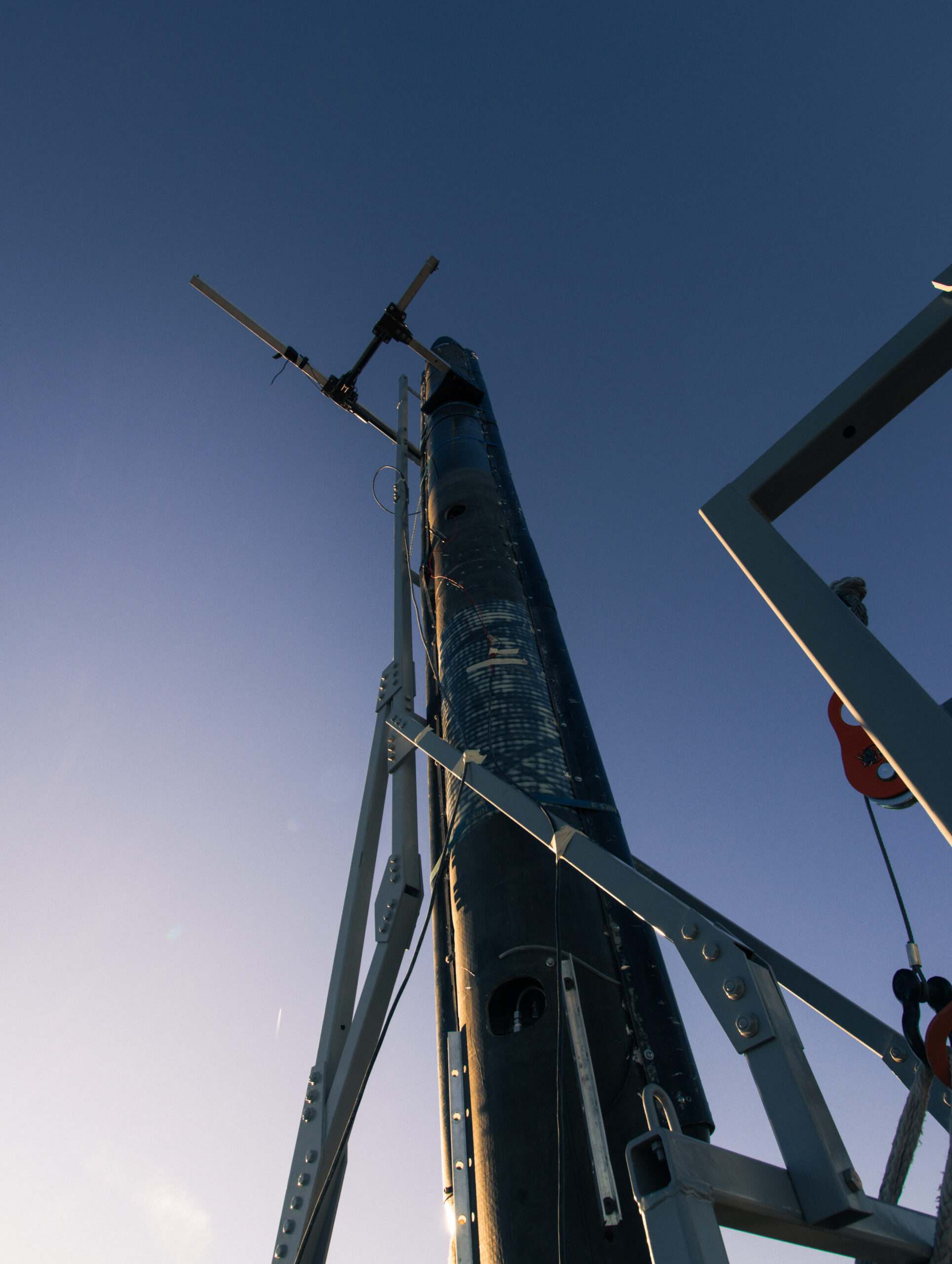
TREL’s first bi-propellant rocket launch.
Launch:
Spaceport, New Mexico
April 27, 2026
Halcyon was a pressure-fed engine blowdown configuration vehicle. The propellants used were RP1 and LOx, with COPVs as the propellant tanks and a fully composite airframe. It boasted an electric TVC system and LOx differential pressure propellant level sensing, as well as utilizing in-house flight computers and flight software.
Build Time: 3 years
Vehicle Height: 27 feet
Contributors: 100+
Man Hours: 500,000+
An Afterword
Halcyon’s launch marks an incredible achievement for TREL. Three years of tireless work and dedication from our engineers resulted in a successful launch. While we did not reach our target altitude owing to an early failure in the rocket’s release mechanism, the fact that we were able to launch at all is a testament to our drive.
We’ve learned much from the attempt, and we’re committed to using that knowledge to rise to ever greater heights (literally). Stay tuned for our upcoming projects!
What’s Next for TREL? >
Halcyon Archive
Static Fires:
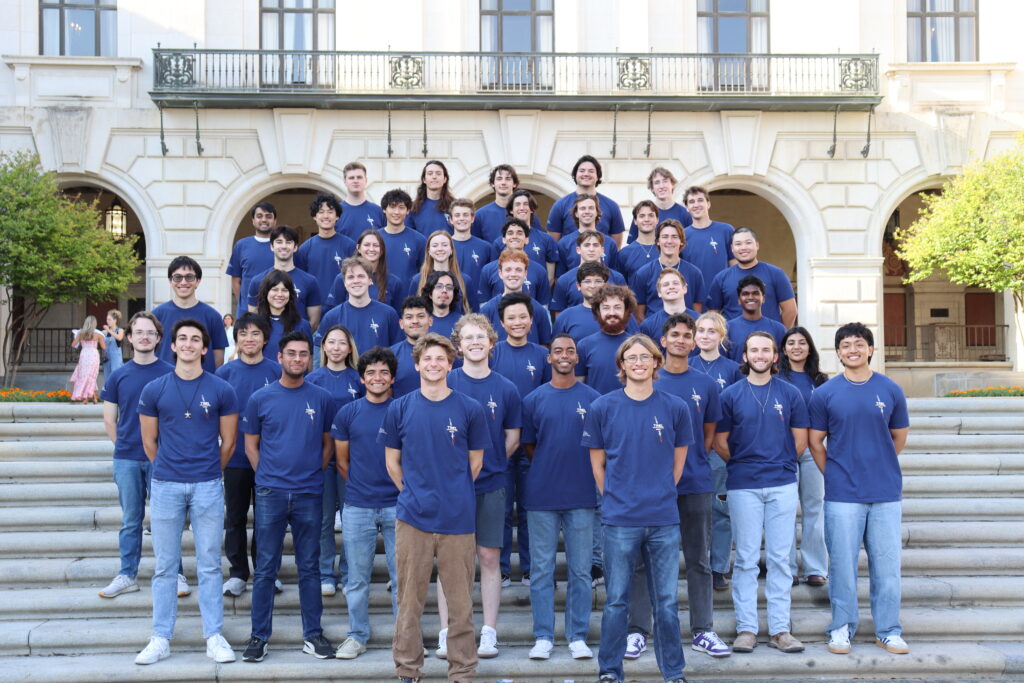
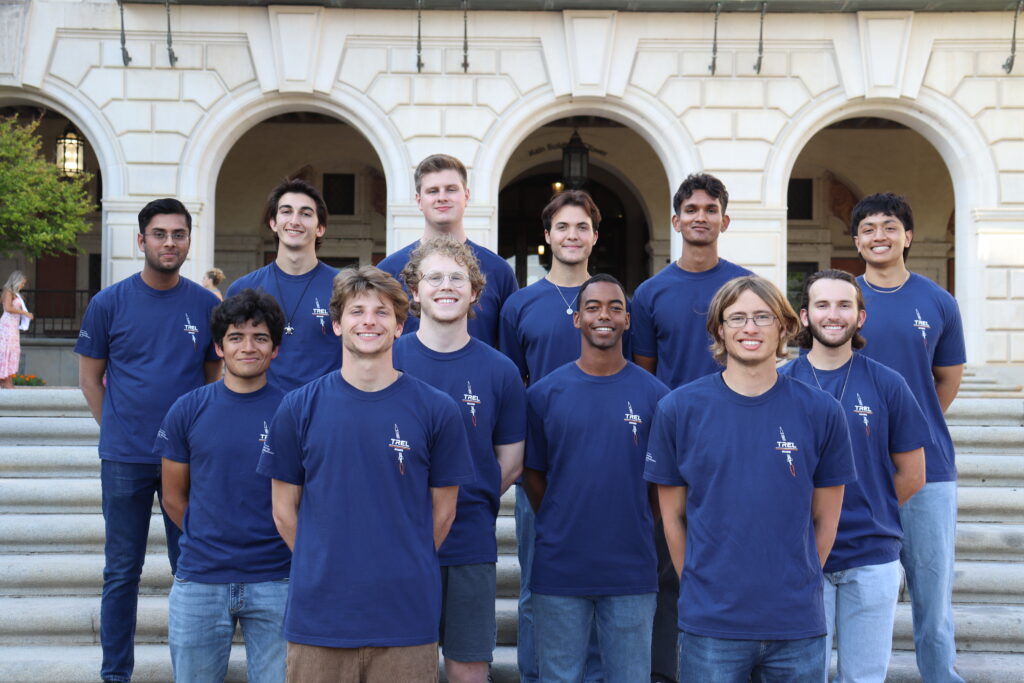
Team Halcyon
Subteams
Test and Launch Operations
Test and Launch focused on the development and operation of the Ground Support Equipment (GSE) and all other infrastructure that validated Halcyon’s mission from prior to integration all the way up to launch. The Test and Launch department consisted of three test stands – The Engine Test Stand (located at Briggs TX), used to hotfire our engine and validate the Engine Team’s designs. The Vehicle Test Stand, used to static fire and launch our vehicle, and various smaller test stands located at our pickle research campus.
Integration and Ground Structures
Integration and Ground Structures owned all of the ground support structures for the vehicle, including the strongback, launch mount, and other lift and static fire hardware. They also owned the vehicle CAD and the vehicle integration onto these structures.
Stage Propulsion
Stage Propulsion owed all the vehicle fluid systems, including the propellant sensing, liquid oxygen press, RP press, igniter, fill, and engine feedline systems. They owned the inter tanks that housed these assemblies and the inter tank routing. The Stage team developed an on-vehicle press system, mass saving in the inter tanks, and machined in-house main valves. Additionally, the Propulsion team oversaw the Thrust Vector Control system, which directed Halcyon’s flight trajectory.
Engine
The Engine team owned the engine system and engine assemblies, which included the chamber, igniter, injector and nozzle. The engine team created an in-house manufactured ablative nozzle, as well as an in-house designed and tested electric pump for Halcyon
Mechanisms
The Mechanisms team owned all mechanical systems on the vehicle, including the Thrust Vector Control, Actuated Canards, Static Fins, and Recovery systems. They developed the canards system on Halcyon, simplifying recovery and improving vehicle control authority.
Structures
The Structures team owned the vehicle structure, including the COPVs, airframe, bonded joints, coupler, nosecone, and raceways. They manufactured of all of these structures, as well as the ablative nozzle. The Structures team also developed a test for our COPV bonded joints, as well as created our metallic airframe and tank architecture.
Ground Station Software
The Software team owned all code, including our in-house flight software and in-house ground software. They created from scratch our ground software stack, as well as our flight software, control systems, and GPS logic.
Avionics
The Avionics team owned all electronics on the vehicle, including the in-house flight computers, the GPS and antennas, the RF system, the harnessing, and the inter tank avionics. They developed TVC Driver PCBs, as well as increased reliability for Halcyon.
Guidance, Navigation, & Control
The GNC team owned the simulation of the vehicle for vehicle trajectory and dispersions. They developed a 6-DOF simulation, as well as controllers for the TVC and Canards systems. The GNC team implemented controllers and made dispersions/trajectories for our launch site, as well as created a fully in-house simulation.